Liang Wenfeng, DeepSeek, and the Original Intention Behind Inclusive AI
A reflective essay on Liang Wenfeng, DeepSeek, open source, long-termism, and why DeepSeek's 'inclusive era' matters beyond model benchmarks.
The official DeepSeek-V4 preview article used a phrase worth pausing on: the inclusive era.
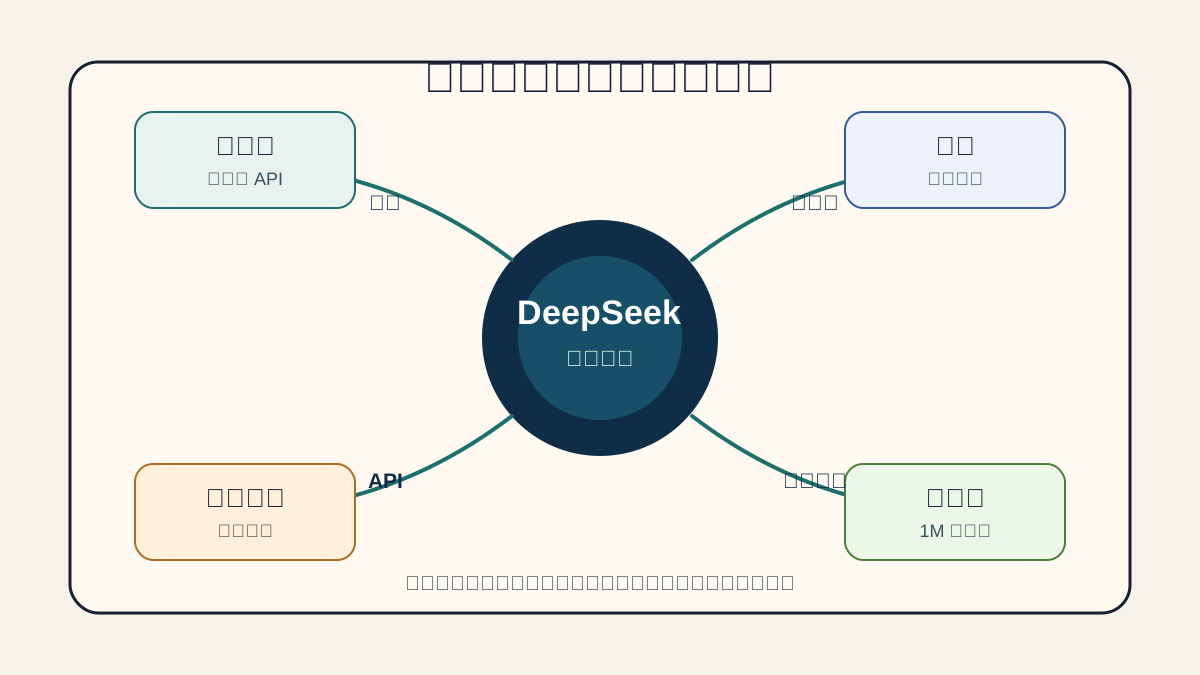
It did not frame the release only as a benchmark race. It tied 1M context, open weights, low-cost API access, and stronger agent capabilities to a broader direction: making frontier model capability something more developers, students, startups, and researchers can actually use.
Inclusive Does Not Just Mean Cheap
DeepSeek is often discussed through price. That is understandable. Lower API prices change what small teams can afford to build.
But inclusion is larger than price. Price lowers the bill; inclusion lowers the barrier to participation.
The DeepSeek-V4 preview says 1M context will become standard across official DeepSeek services. That is a product and ecosystem signal: long context should not be a premium-only capability reserved for a few large buyers. It should become a baseline capability that ordinary API users can rely on.
That is why DeepSeek matters beyond rankings. It is shifting capabilities that previously felt reserved for large companies toward everyday builders.
The Deeper Theme Is Original Innovation
Liang Wenfeng is often associated with the argument that China AI cannot remain in a follower position forever. In the broader interview context, the point is not rhetoric. It is about technical ecology.
If a community only follows, it always receives the roadmap second-hand. If it wants a roadmap of its own, someone has to move closer to the frontier.
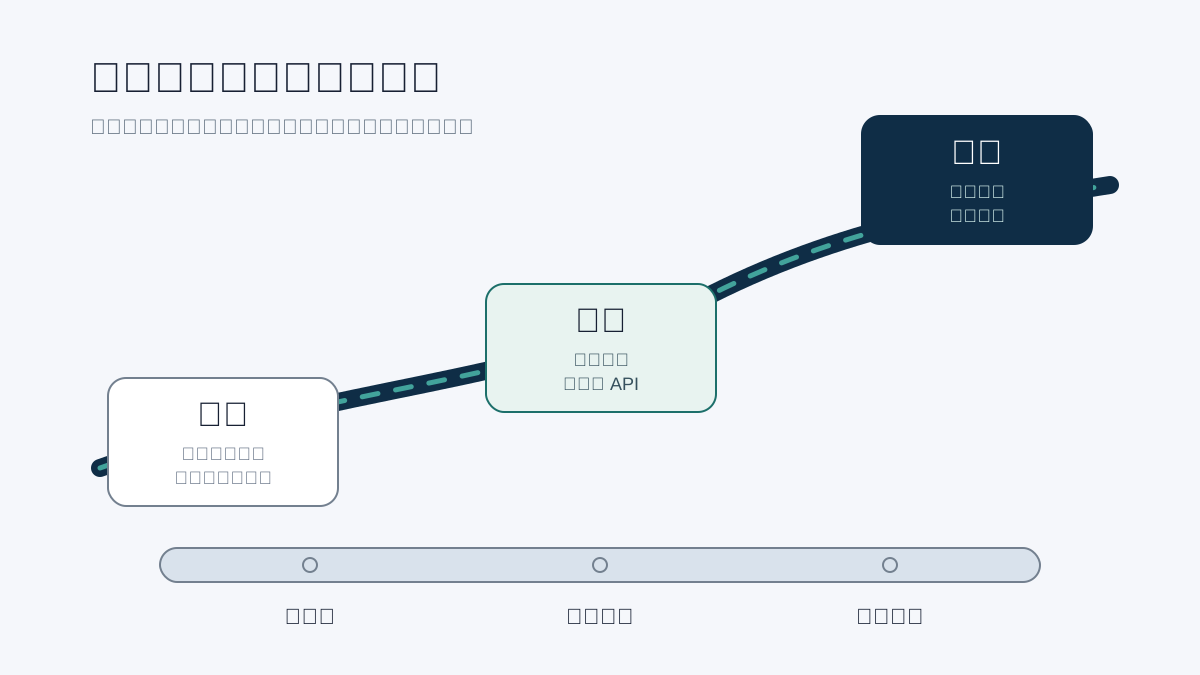
DeepSeek’s path from V2 to V4 is best understood this way: model architecture, training efficiency, inference cost, long context, open release, and API access are part of one system. Liang once gave a short answer about open source: “We won’t close source.” That line is less a marketing promise than a view about ecosystem formation.
Why Not Rush Into Applications?
Many AI companies start with distribution: where are the users, where is monetization, where is the app?
DeepSeek’s answer has been unusually restrained. In public interviews, Liang has consistently put research and technical innovation before near-term application packaging. That does not mean ignoring business. It means judging the current phase differently.
If AI is treated as an internet product, the main problem is growth. If AI is treated as infrastructure, the main problem is the technical curve and the division of labor around it. DeepSeek clearly leans toward the second view.
That explains the company’s quiet style: fewer personal narratives, fewer launch events, more papers, weights, APIs, and technical reports.
Not Seduced by Praise, Not Afraid of Criticism
The DeepSeek-V4 article closes with a classical line: “不诱于誉,不恐于诽.”
It is a good frame for what DeepSeek has been through. The company has been praised intensely and doubted intensely. Both are dangerous for a frontier research organization. Praise can tempt performance; criticism can tempt endless explanation.
The hard thing is to keep doing the work.
In interviews, Liang repeatedly returns to curiosity, technical confidence, basic ability, and love for the work. His hiring philosophy also points in that direction: experience matters less than foundational ability, creativity, and genuine interest.
That makes DeepSeek look less like a conventional startup and more like a research workshop with concentrated compute, talent, and patience.
What the Inclusive Era Really Means
If DeepSeek’s original intention had to be compressed into one sentence, it might be this:
Frontier models should not belong only to a few companies; they should also belong to people willing to learn, build, and create on top of them.
That is the real meaning of the inclusive era. It does not mean everyone instantly owns AGI. It means the boundary of usable frontier capability moves outward: students can read model reports, developers can call APIs, small teams can afford experiments, and researchers can build on open weights.
Liang Wenfeng and DeepSeek are worth writing about not because they offer a perfect mythology, but because they show a different path: original research, open release, lower cost, and long-termism assembled into a working engineering system.
The technology industry likes winner stories. DeepSeek’s more important story is quieter: between praise and criticism, keep walking the path of foundational innovation.